Syrian-Armenian family finally finds peace in Saint-Laurent
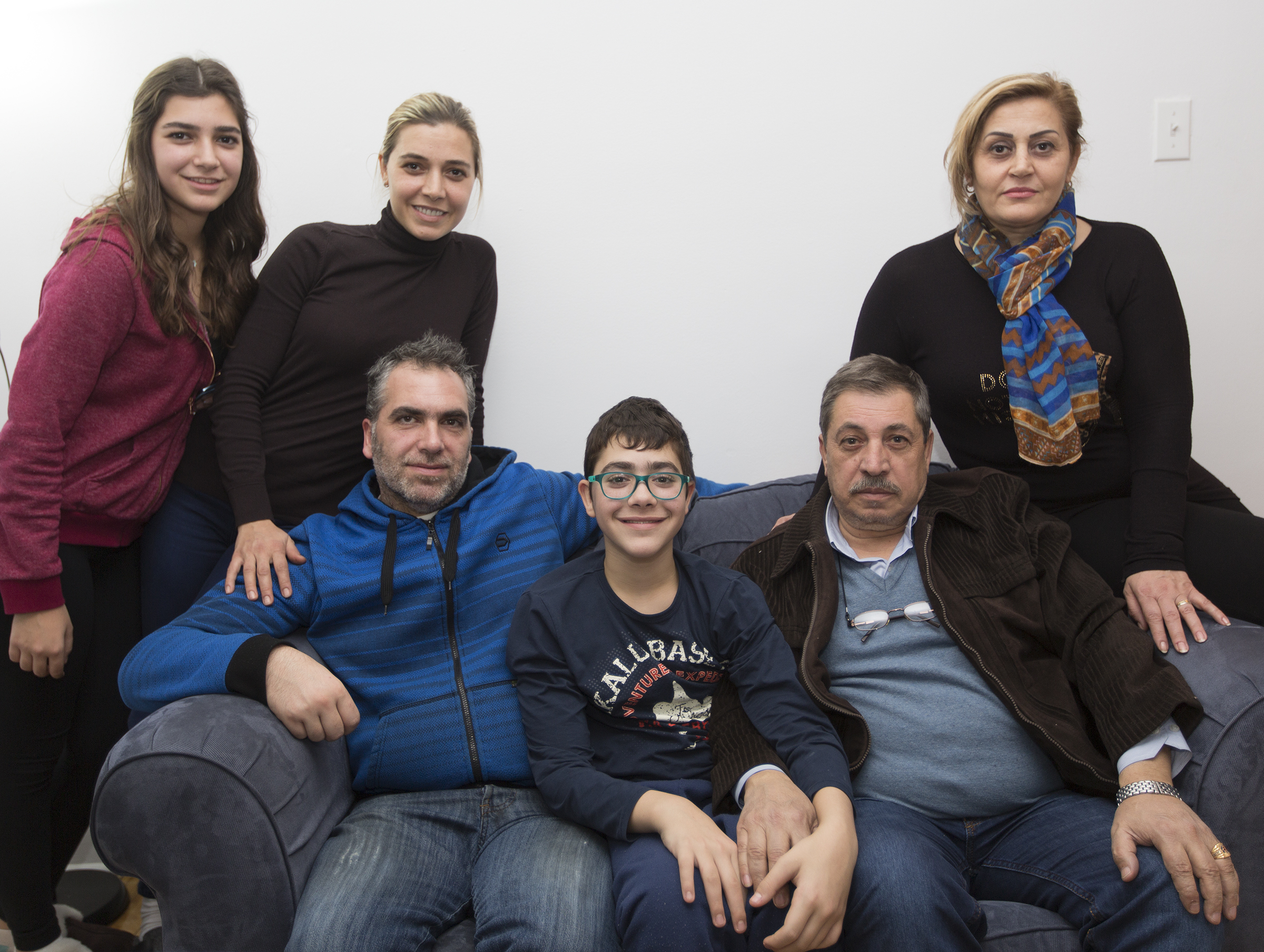
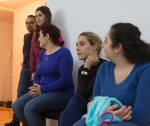
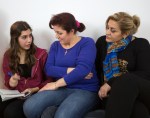
When you enter the Kalaigian’s modest, but pristine apartment on Grenet Ave. in Saint-Laurent, the clean white walls and shiny floors are no indication of the kind of fear the family used to experience daily.
“It was like a horror movie,” said 16-year-old Maral.
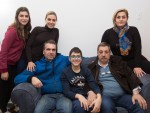
The Syrian-Armenian family, Maria Kalaigian, her husband, Nerses, their daughter, Maral, and 12-year-old son, Harout, arrived in Montreal on Oct. 19 after three years in Beirut, waiting to escape war-torn Aleppo and religious persecution. On Dec. 13, the family became a little more whole when they were joined by Maria’s parents, Moses and Nvart Abkarian.
Canadian experience
Moses is relieved and happy to be in Canada. “Before, when you went to sleep, you didn’t know if you would wake up,” he said. Once settled, they plan to start learning French, and he will look for work. Nerses, his son-in-law, was fortunate to find a job through a family member.
While living in Beirut waiting for their application (sponsored by organisation, Hay Doun) to be accepted, working was near impossible. “It’s very expensive to live there, and no one wants to give us work,” said Maria. The family lived off of savings and Maria pawned her jewelry to make ends meet.
The contrast in Canada is huge for the family. “Canadian people are very kind. They want to help us. You feel like you’re really a person here,” said Maria. The stereotype of Canadian politeness is not lost on them.
The children are in school, one at École Emilie Legault and the other at an Armenian school. A dream come true for their father. “I did this all for them, so that they could have a future,” said Nerses.
Hard times
Living in an Armenian –Christian community in Aleppo, the family had it all, “but ISIS changed everything,” said Maral. On Valentine’s Day in 2012, shattered glass rained on Maral’s classroom. Like the delicate window panes, the family’s sense of safety had also been destroyed.
“We were scared to wear a cross,” said Harout. The family had heard too many stories of the religious jewelry being ripped from someone’s neck for its gold, the wearer killed, or never seen again.
A month would pass without electricity or water. Neighbours would burn furniture in an effort to keep small children from freezing. Sometimes they would sleep in their clothes in case they had to flee in the middle of the night.
Their grandfather, Moses, recalled one day going to open his shop, where he worked as a machinist, only to find a dead body lying on the ground in front of the door. “I turned around and went home,” he said.
Their friends and family who are still in Syria are numb, the Kalaigian’s explained. “They say that they will leave, if they live to have the chance.”
Future and uncertainty
The Kalaigian family is relieved to have the word “immigrant,” not refugee, on their papers. “After moving so many times, we’re happy to have somewhere to call home,” said Maral.
One fear stays with the family—a fear vocalized by Canadians and the international community: that terror can spread. “We’re afraid it will come here,” the family agreed.
Moses’ brother and wife are still awaiting approval to come to Canada, while his mother, 85-years-old, will remain in Syria. In the mean time they are happy to be together again, rest, and start a new life in Montreal.
Articles récents du même sujet